
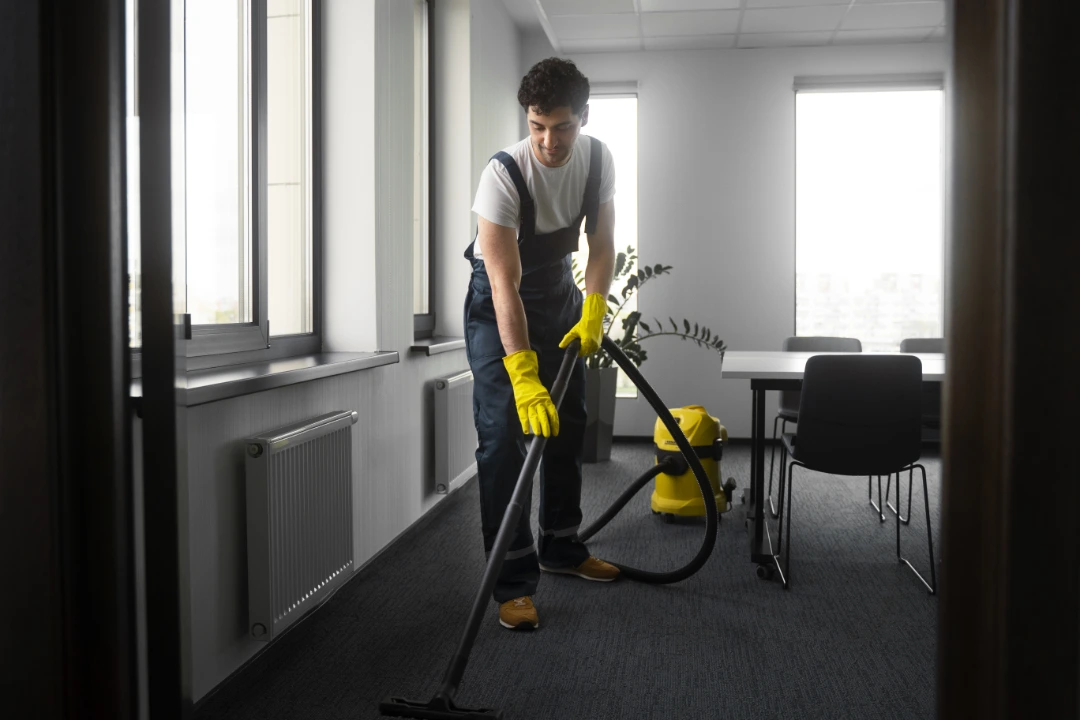
BUILT FOR BEND’S HIGH-DESERT CLIMATE
Our 7-Step Carpet Cleaning Process — Bend, Oregon
Every step exists for a specific reason — cinder dust pre-treatment, wildfire smoke chemistry, high-desert fast-dry methods. Nothing generic, nothing copy-pasted from a national franchise manual. See who we are and how we got here.
★★★★★ 100+ Reviews
IICRC Certified
30-Day Guarantee
Serving Bend Since 2019
Most carpet cleaners run the same 3-step routine everywhere they work: spray, agitate, extract. That works fine in a moderate-soil city. It does not work in Bend. Volcanic cinder dust from Central Oregon’s terrain, wildfire smoke particulate from fire season, and juniper pollen all require different pre-treatment before a drop of water touches the carpet. Skip that step and you’re just pushing embedded soil deeper into the pile. Here is exactly what we do, in order, and why each step exists.
Phone Triage & Property Details
Before we ever load the truck, we gather the details that determine our approach: square footage, carpet fiber type if known, pet history, any visible staining, and whether the home has experienced recent wildfire smoke exposure. This isn’t small talk — it’s how we know which pre-treatment chemistry to load before we leave the shop, so we’re not guessing on your driveway.
On-Site Inspection & Fiber Assessment
We walk every room with you before touching anything. We assess carpet fiber type, traffic wear patterns, and cinder-dust concentration at entryways — Bend’s volcanic dust settles heaviest within the first few feet of every exterior door. For pet households, we run a UV blacklight scan that reveals contamination invisible under normal light, often 30–50% larger than the visible stain. You get an honest read on what we’re dealing with before we quote a price.
Transparent Pricing & Plan
You get a written price before work begins — $35–$55 per room, $150–$300 flat for a typical 3-bedroom home, published upfront with no quote-gating and no on-site surprises. If your carpet needs sub-surface pet treatment or wildfire smoke chemistry, we tell you that cost separately before we start, not after.
Dry-Soil Pre-Treatment (Cinder Dust Protocol)
Entryways and high-traffic zones get a dry agitation pass with HEPA-filtered equipment to lift abrasive cinder grit before any moisture is introduced. This single step is the one most cleaners skip — and it’s the reason their results don’t last. Wet-first cleaning on cinder-loaded carpet just grinds silica particles deeper into the fiber, causing the exact abrasive wear that shortens carpet life in Bend homes.
Targeted Pre-Spray & Dwell Time
An eco-friendly, pet-safe pre-spray is applied and allowed to dwell for 10–15 minutes — this is where the actual chemistry does its work breaking down soil bonds. For wildfire smoke odor, we switch to a higher-pH alkaline pre-spray specifically formulated to break the adsorption bond between combustion particles and carpet fiber; standard pre-spray doesn’t reach that pH range. For pet stains, targeted enzyme treatment goes down at this stage too — not sprayed on at the end as an afterthought.
Truck-Mounted Hot Water Extraction
We use truck-mounted extraction at 220°F and 300+ CFM — the only equipment class powerful enough to pull embedded cinder dust and smoke particulate out of carpet pile rather than just redistributing it. Portable rental machines generate a fraction of this suction and leave most of what we’re trying to remove still in the fiber. Spot and odor treatment for pet stains and set-in marks happens here too, each getting its own chemistry and dwell time rather than a single pass with the main wand.
Grooming, Airflow & Moisture Check
Pile is groomed for even drying and appearance, then we position airflow to take advantage of Bend’s natural low humidity — our high-desert climate means faster drying than almost any coastal market, typically 2–4 hours versus 8–24 hours in humid regions. We confirm dryness with a moisture meter before we consider the job done, and STR hosts get the low-moisture method by default for same-day guest turnaround.
Our Process vs. the National Franchise Routine
| Step | Carpet Shield Bend | Generic / National Chains |
|---|---|---|
| Dry-soil pre-treatment | ✅ Standard on every job | ❌ Usually skipped |
| Wildfire smoke chemistry | ✅ Specific high-pH pre-spray | ❌ Not addressed |
| UV pet contamination scan | ✅ Included, every visit | ⚠️ Rarely offered |
| Equipment | ✅ Truck-mounted, 300+ CFM | ⚠️ Often portable rental-grade |
| Pricing | ✅ Published upfront | ❌ Quote-gated, on-site surprises |
| Dry time in Bend | 2–4 hours | 8–24 hours (generic method) |
What Bend Homeowners Say About the Process
“The dry pre-treatment pass before adding any water was something I’d never seen another cleaner do. Our hallway carpet near the garage came out looking like we’d replaced it.”
— Trish M., Northwest Crossing
“They walked me through every step before starting and gave me the price in writing. No surprises when the invoice came — exactly what they quoted.”
— Derek L., Sunriver
“Dry in about 3 hours, which mattered a lot since I had guests checking in that evening. They explained why the low-moisture method works so fast here.”
— Sara K., Old Farm District
Frequently Asked Questions — Our Cleaning Process
Why does dry-soil pre-treatment matter so much in Bend?
Volcanic cinder dust is abrasive and silica-based. If you introduce water before removing it, you’re grinding those particles deeper into carpet fiber instead of lifting them out — accelerating wear and shortening carpet lifespan.
How long does the full 7-step process take?
Most 3-bedroom Bend homes take 2.5–3.5 hours from arrival to final moisture check, depending on soil level and whether pet or smoke treatment is needed.
Do you use the same process for pet odor and wildfire smoke?
No. Pet odor requires enzyme treatment during the pre-spray dwell stage; wildfire smoke requires a higher-pH alkaline pre-spray that standard chemistry doesn’t reach. We diagnose which one applies before selecting chemistry.
Is truck-mounted extraction really better than portable machines?
Yes — truck-mounted systems generate 300+ CFM of suction versus roughly 40–80 CFM from rental-grade portables. That difference is what actually pulls embedded cinder dust and smoke particulate out of carpet pile rather than redistributing it.
What if I need same-day service for a vacation rental turnover?
We default to our low-moisture method for STR hosts specifically because it dries in 2–4 hours in Bend’s climate — fast enough for back-to-back guest turnovers.