Puppy Potty Training and Your Carpet
Anyone who has house-trained a puppy knows the pattern: many small accidents, in a handful of favoured spots, over several months. That is a genuinely different carpet problem from one large incident, and the difference matters for how you handle it.
Training accidents are frequent, small and repeated in the same locations. Volume per incident is low, but cumulative deposit in those spots is high. The self-reinforcing part is scent: a puppy returns to where it can smell previous accidents, so incomplete cleaning actively prolongs training.
Why the same three spots
Puppies choose surfaces and locations by scent and texture. Once a spot has been used, residual odour marks it as an appropriate place, and the animal returns. This is not stubbornness; it is exactly how the species is designed to work.
book a Bend carpet cleaner directly affects training duration. Remove the odour completely and the location loses its signal. Leave residue and you have marked the spot for the puppy rather than unmarked it.
The ammonia mistake
Urine breaks down into ammonia compounds. Many household cleaners are ammonia-based. To a dog, an ammonia-cleaned patch smells like urine, which reinforces the exact behaviour you are trying to stop.
Check the label. If ammonia appears, keep it away from anywhere the puppy has access to. The same applies to some glass and multi-surface sprays.
What to do during training
- Blot immediately and heavily. Fresh urine is far easier to remove than dried. Stand on a folded towel over the spot to draw liquid up from the backing.
- Use an enzyme cleaner, not a deodoriser. Enzymes break down the organic compounds; deodorisers add fragrance on top of them.
- Give the enzyme time. These are biological catalysts and they need minutes to work. Applying and immediately blotting removes the product before it has done anything.
- Rinse afterwards with clean water and blot. Residue attracts soil and makes the spot visibly darker within weeks.
- Keep a record of locations. It helps at the end of training, and it helps a technician map the job.
The end-of-training reset
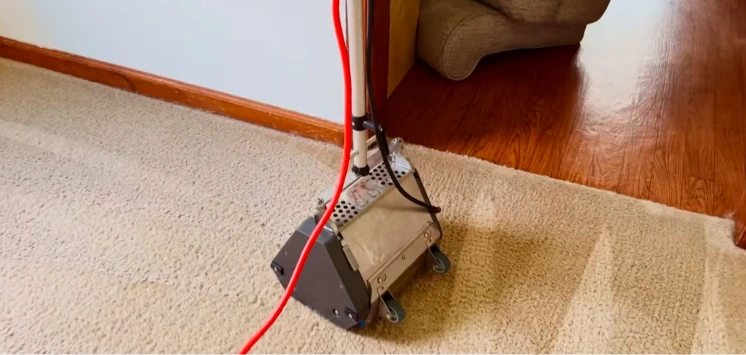
Once the puppy is reliable, a full professional clean is worth doing as a deliberate reset rather than waiting for the next scheduled cleaning. Several months of small deposits add up to meaningful accumulation in those favoured spots, even when each individual incident was handled well.
a reset clean: it removes the cumulative deposit that home treatment could not reach, and it removes the scent map that could trigger regression during a stressful period such as a house move or a new pet arriving.
When to worry about the pad
small volumes rarely reach the pad. Repeated small volumes in the same square foot eventually can, particularly on a carpet with an open backing or where the accident happened against a wall where liquid pools.
The signals are odour that intensifies in humid weather, a spot that smells stronger after cleaning than before, and discolouration that does not change when the area is damp. Any of those is worth a UV inspection before deciding what to spend.
Frequently Asked Questions
Why does my puppy keep going in the same spot?
Residual odour marks the location as appropriate. Puppies return to places they can smell previous accidents, which means incomplete cleaning actively prolongs training rather than just leaving a stain.
Can I use an ammonia cleaner on puppy accidents?
No. Urine breaks down into ammonia compounds, so an ammonia-cleaned patch smells like urine to a dog and reinforces the behaviour you are trying to stop. Check labels on multi-surface and glass sprays too.
What is the best cleaner for puppy accidents?
An enzyme cleaner rather than a deodoriser. Enzymes break down the organic compounds causing odour, while deodorisers add fragrance over the top. Give the enzyme several minutes to work before blotting.
Should I get carpet professionally cleaned after training?
Yes, as a deliberate reset. Months of small accidents accumulate in favoured spots even when each was handled well, and a full clean removes both the deposit and the scent map that can trigger regression later.
How do I know if urine reached the carpet pad?
Odour that intensifies in humid weather, a spot that smells stronger after cleaning, or discolouration that does not change when the area is dampened. Any of those warrants a UV inspection before spending money.
Training phase over? Time for a reset clean.